Why Most Plumbing Websites Don’t Rank (Even When the Company Is Excellent)
Here's a surprising fact: 46% of all Google searches have local intent. This means almost half of your potential customers are looking for plumbers in their area right now.
Many excellent plumbing companies face a frustrating reality - they can't rank well in plumbing search engine optimization. The contrast is clear - your team delivers great service, yet customers simply can't find you online.
Let's look at the numbers. Local search stands as the most powerful way to get new customers, driving 28% of all business transactions for plumbing companies. The numbers get even more interesting - 88% of consumers make their plumbing service choices based on local search results. Simple plumbing jobs cost $200-$500, while major projects like water heater replacements can reach $5,000. This is a big deal as it means that revenue potential drives fierce competition in the market.
You might wonder why quality plumbing businesses struggle with plumbing SEO and plumbing local SEO. In this piece, we'll get into the systemic problems that keep your website from ranking, even when your plumbing company delivers exceptional service. We'll cover everything from plumbing SEO keywords to budget-friendly plumbing contractor local SEO services, showing you the critical mistakes that make your business invisible to potential customers and the solutions you need.
Mistake #1: Treating SEO Like a One-Time Task
Many plumbing companies make a big mistake by treating search engine optimization as a "set it and forget it" task. They put money into the original website optimization and expect the benefits to keep coming without doing anything else. This basic mistake can hurt even the best plumbing businesses with great service records.
Why SEO is an ongoing process
The search world changes faster than most plumbing business owners realize. Google tweaks its algorithm about 12 times daily, making it the most advanced search engine that ever spread. Each update can change how plumbing websites rank while some pages go up while others drop down.
You just need to keep watching this changing scene. SEO has several connected parts:
- Website content optimization for keywords that matter
- Quality backlink building to rank better
- Local listing and citation management
- Performance tracking through analytics
- Quick response to algorithm changes
Your plumbing SEO rankings work just like a good plumbing system - you need regular checks, updates, and fixes to stop things from breaking down.
On top of that, people keep changing how they search. Someone looking for emergency plumbing services today searches differently than they did last year, especially when you have mobile and voice search. Getting into the top three local map pack results can really boost your business.
How Google rewards consistent updates
Google's algorithm likes websites that stay active and relevant. Fresh content on your plumbing website tells search engines your business is alive and focused on what customers want.
So, Google rewards you with:
- More frequent indexing - New content makes search engines visit your site more often. These regular visits help your search visibility grow.
- Better ranking signals - The algorithm likes websites that update regularly. Fresh content shows you're staying current and relevant.
- Better user engagement - Updated content brings visitors back and keeps them longer on your site. Google sees this as proof of quality.
Plumbing companies often make their biggest SEO mistake by "starting out strong and then going quiet". Google gives better rankings to businesses that keep their information fresh, make customers happy, and stay active online. Your active presence tells Google you're trustworthy, which leads to more customer calls.
Your Google Business Profile (formerly Google My Business) stands as your most valuable local SEO tool, making up 32% of Local Pack ranking factors. Regular posts, updates, deals, and seasonal reminders show Google your business stays active.
Plumbers can match this ongoing approach with seasonal service opportunities. Winter plumbing maintenance, spring pipe inspection tips, and summer water conservation advice create natural content cycles that help potential customers while showing Google you're still relevant.
Successful plumbing companies treat local SEO like any other key business task - it needs regular attention just like customer service or equipment maintenance. This simple change in thinking sets successful plumbing businesses apart from those struggling to stay visible online.
Mistake #2: Ignoring Local SEO Fundamentals
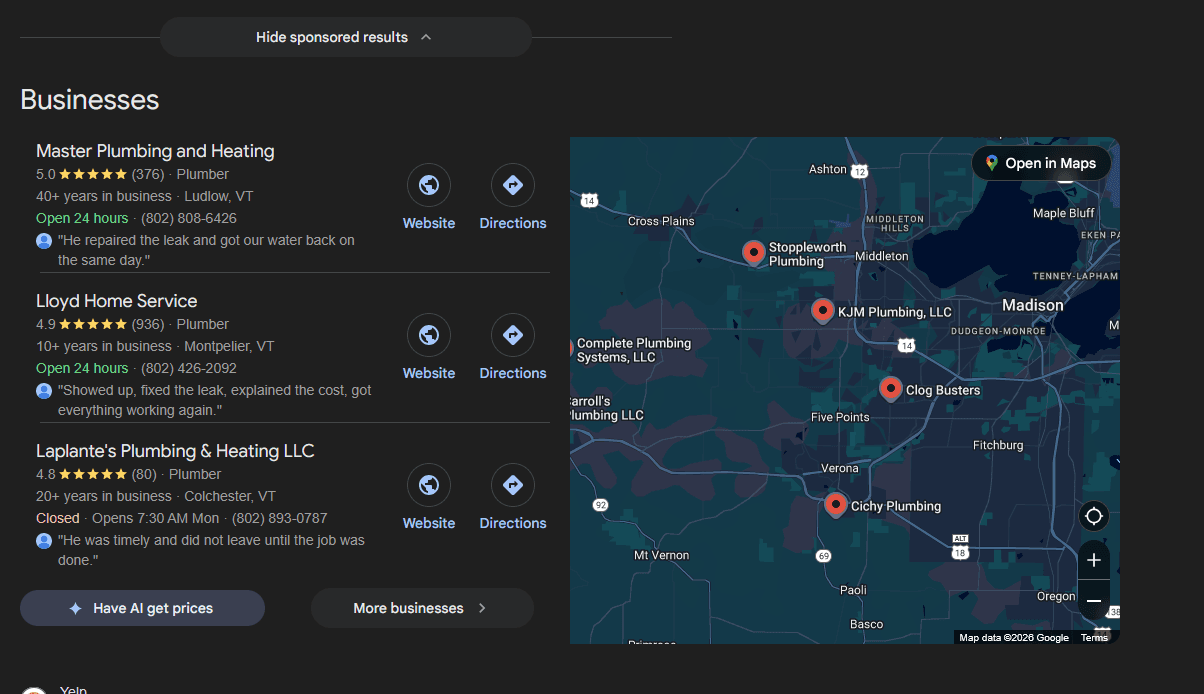
Local SEO is the life-blood of online visibility for plumbing businesses. Many plumbing companies miss two key elements that can make or break their plumbing search engine optimization ranking.
NAP inconsistencies across platforms
NAP (Name, Address, Phone number) consistency is the life-blood of local SEO for plumbing businesses. Think of NAP as your company's digital fingerprint - it shows search engines who you are, where you're located, and how customers can reach you. Many plumbing companies hurt their rankings by having inconsistent NAP information.
Your business information needs to be the same across all online platforms. Google will reward you with higher local search rankings when it sees this consistency. Mixed information creates confusion for algorithms and potential clients alike. If Google sees "Smith Plumbing" on one site and "Smith's Plumbing Service" on another, it can't be sure these are the same business. This splits your ranking signals or makes Google ignore certain citations completely.
Common NAP inconsistencies that plague plumbing companies include:
- Business name variations (formal vs. commonly used names)
- Address formatting differences ("Street" vs. "St." or "Suite" vs. "Ste.")
- Multiple phone numbers (office, mobile, tracking numbers)
- Location variations for businesses with multiple service areas
Even small formatting differences like writing "Street" in one place and "St." in another can confuse search engines and hurt your rankings. These tiny differences can split up citation signals and reduce your local SEO authority.
Listing management tools like BrightLocal or Moz Local NAP checker can help maintain consistent NAP. These tools let you audit your online presence and keep information uniform across platforms. Make sure to update all your listings right away if your business moves, gets acquired, or changes phone numbers.
No local citations or directory listings
The second big mistake is ignoring local citations, mentions of your business information across the web. Citations help verify your business's legitimacy and boost your local presence.
Plumbing businesses get two main benefits from citations: They improve your local SEO rankings and make it easier for customers to find you when they need plumbing services [19, 20].
Plumbing-specific directory listings are great because they signal relevance to search engines. Industry experts say these platforms matter most:
- Google Business Profile is by far the most important listing for plumbers, bringing direct leads and serving as the foundation of your local SEO strategy
- Bing Places for Business
- Apple Maps
- Yelp
- Angi (formerly Angie's List)
- HomeAdvisor
- Better Business Bureau
- Thumbtack
- Facebook Business Page
- Yellow Pages
You'll find more citation opportunities on industry-specific platforms like Plumber.com, Plumbing Webmasters, and Houzz. Local community citations are valuable too, especially from your Chamber of Commerce, business improvement district listings, and city/county government business licenses.
In fact, being listed on multiple online directories makes it much easier for potential customers to find your services. But just creating profiles isn't enough, they need to be complete. Using PO Boxes instead of physical addresses or having mixed information across platforms can hurt your plumbing SEO efforts.
If you're having trouble managing citations, dedicated plumbing contractor local SEO services can help audit and standardize your digital presence. You can handle this basic aspect yourself with careful attention to detail.
The key is consistency - your NAP details should match exactly across every directory and citation source. When done right, consistent local citations boost your website's local search rankings and bring more calls and bookings to your plumbing business.
Mistake #3: Poor Use of Plumbing SEO Keywords
The right keywords can make or break a plumbing website's visibility. My analysis of numerous plumbing businesses shows that even great service providers hurt their online presence by making two big keyword mistakes.
Targeting broad terms instead of service + location
Many plumbing companies try to rank for broad, competitive terms like "plumber" or "plumbing services." This strategy misses the mark on how people actually search for services today. Simple keywords like "plumber" usually show that someone wants information, not services. These generic terms are tough to rank for, and local businesses rarely succeed with them.
The best plumbing SEO keywords combine specific services with locations. This matches how people search, since 46% of Google searches have local intent (as we mentioned earlier). Let's look at two different approaches:
Ineffective approach: Targeting "water heater repair" nationally Effective approach: Targeting "water heater replacement Phoenix" or "emergency plumber in Austin, TX"
Location-based keywords boost your chances of showing up when locals need a plumber. You'll rank better in plumbing search engine optimization by adding your city or neighborhood to key website elements:
- Page titles (e.g., "Emergency Plumber in Austin, TX | 24/7 Local Service")
- Meta descriptions (e.g., "Need a reliable plumber in North Dallas?")
- Header tags (H2s and H3s)
- Service pages and blog post titles
- Image alt text (e.g., "plumber fixing a leaking faucet in Tampa")
Google favors clear, locally relevant content that reads naturally. Keywords that include specific neighborhoods often face less competition and attract customers ready to hire.
No keyword research or mapping strategy
The second mistake happens when businesses skip systematic keyword research or lack a clear mapping strategy. This leads to targeting wrong terms or missing good opportunities.
Great plumbing SEO starts with knowing what customers type into search engines. Many people check only search volume in keyword tools and miss intent and proximity. Search volume alone doesn't tell the whole story, sometimes lower-volume keywords convert better because they match user needs perfectly.
Here's how to build an effective plumbing SEO keywords strategy:
- Start with Google Keyword Planner: Access your Google Ads account and search for phrases like "plumber near me" or "drain cleaning service" to find related keywords, search volumes, and difficulty levels.
- Use specialized tools for deeper insights: SEMrush or Ahrefs help analyze your website and competitors to find your current rankings and missed opportunities.
- Filter for buyer intent: Focus on transactional keywords with words like "repair," "installation," or "emergency" that show someone wants to hire.
- Create a keyword hierarchy: Mix broad terms with long-tail keywords to target both general visibility and specific needs. This gives you complete coverage.
- Map keywords to content: Create a plan that matches specific keywords to the right pages on your website.
Long-tail keywords work well despite lower search volumes. Phrases like "how to fix a leaky kitchen faucet" or "best water heater for small homes" attract visitors who know what they want and are more likely to book service.
In stark comparison to this, businesses without keyword mapping create content that misses their customers' search terms. Your expertise stays hidden from people who need it most.
Note that your keyword strategy should go beyond your website. Content about unclogging toilets or comparing water heater types tells Google you're an authority on plumbing, which can help you rank better for lead-generating keywords.
Mistake #4: Weak or Generic Service Pages
Service pages are the life-blood of good plumbing websites. Yet many excellent companies don't give them enough attention. Your plumbing SEO ranking depends on how well these pages are structured and what they say. This could mean the difference between customers finding you or your competition.
No unique content for each service
Plumbing companies often make a basic mistake. They stuff all their services onto one generic page. This shows they don't really get how search engines work. Google's algorithm likes pages that stick to one clear topic and rewards specific content. Each main plumbing service needs its own page to show up in searches.
You should create separate pages instead of one big "Services" page:
- Water heater installation
- Drain cleaning
- Emergency plumbing
- Sewer line repair
- Bathroom remodeling
Each service page needs plenty of unique content. SEO experts say you need at least 300-500 words per page. Google might not even list your pages without this much content. There are thousands of plumbing service pages out there already - a basic version won't stand out.
Your service pages need these specific elements:
- Headlines that use your target keywords and location
- Service overviews that explain problems and solutions
- Sections that show what makes your company special
- Answers to common questions
- Clear pricing details where possible
- Elements that make people want to call you
We learned that copying content between service pages with tiny changes doesn't work. Google will actually punish you for "thin" or copied content. One plumber saw his website traffic jump 40% after he rewrote his service descriptions to focus on customer needs instead of generic lists.
No mention of local areas served
Many plumbers forget to add location details to their service pages. People often search for "[service] in [location]." Pages without this info miss out on rankings. Plus, customers want local plumbers, so adding location details helps both SEO and sales.
The best service pages should show:
- Cities, neighborhoods and regions you work in
- Local landmarks people know
- Reviews from local customers
- Maps of where you work
- Any price differences by area
Local customers won't find you if your pages don't mention their area. As one expert puts it, "Most plumbing companies serve multiple cities. You drive 30 miles for emergency calls. You work across entire counties. But Google doesn't automatically know this".
Companies that serve multiple areas should create separate pages for each location. Each page needs real content about that specific area's needs. Just changing city names while keeping everything else similar confuses Google and potential customers.
Your service pages should naturally include location details. To name just one example, instead of "We provide drain cleaning," try "Our drain cleaning services throughout Phoenix include emergency response to Mesa, Scottsdale, and Tempe". This helps both Google and local customers looking for quick service understand exactly where you work.
Your plumbing website won't rank well until you build proper service pages with unique content and clear location details. This remains true whatever your actual service quality might be.
Mistake #5: Neglecting Mobile and Technical SEO
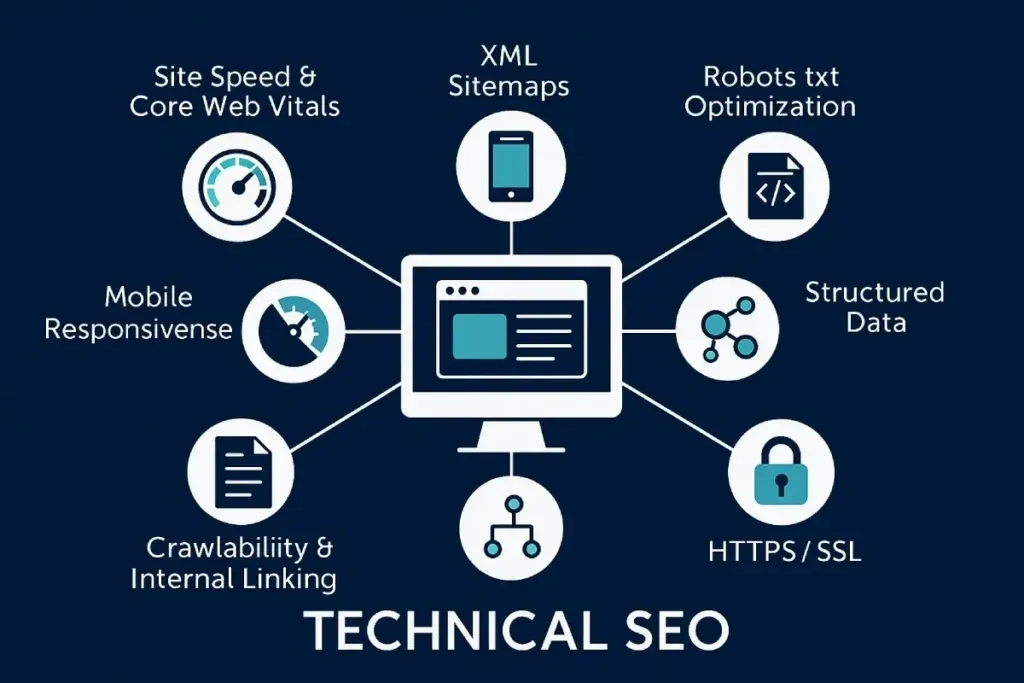
Your plumbing website's technical features will determine if customers can find and reach you during emergencies. Quick response times matter in this industry. Poor mobile optimization and technical SEO elements create barriers between your service and the people who need it.
Unresponsive design and slow load times
Numbers tell the story clearly. More than 64% of local searches happen on mobile devices. This number goes up even more for emergency plumbing needs. People with burst pipes or flooded basements grab their phones instead of sitting at computers.
Google now ranks websites based on their mobile interface. This change means your mobile experience determines your ranking, even if your desktop site looks great. Google made this mobile-first indexing standard in 2019. Many plumbing websites still focus on desktop viewing.
Load speed makes a big difference in getting customers. About 53% of mobile users leave websites that take more than three seconds to load. Emergency plumbing customers are stressed and will only wait about two seconds. Slow websites drive away 32% more potential customers, sending them straight to your competitors.
Common speed problems on plumbing websites include:
- Uncompressed images (especially job photos from smartphones)
- No caching setup
- Complex redirects that slow down responses
- Too many plugins or scripts
Your mobile site should make critical information easy to find. Emergency customers need to see certain details right away: a phone number they can tap, your service area, and when you're available. Other details like company history, testimonials, and service descriptions become less important in emergencies.
No structured data or sitemap
Many plumbing websites miss out on essential technical SEO elements that show search engines they're trustworthy and relevant.
Structured data markup (schema) helps Google understand your business better. This boosts your visibility in search results. Plumbing websites should use local business schema markup to show:
- Areas you serve
- Emergency availability
- When you're open
- What customers say about you
- Services you offer
Without this technical setup, your website won't show up as often in local searches. Schema markup lets you display enhanced listings with star ratings, prices, and other details that catch customer attention.
A proper sitemap helps search engines find and list all your web pages. This technical guide shows Google your most important pages and how they connect. Plumbing businesses with multiple service pages and location-specific content need a complete sitemap to show up in searches properly.
Mobile-friendly websites and technical optimization are the foundations of all SEO efforts. Plumbing companies that don't address these basics won't be visible to customers looking for their services, no matter how good their work is.
Mistake #6: No Strategy for Reviews or Backlinks
Trust signals make or break many plumbing websites' ranking success. Your expertise stays hidden from potential customers looking for your services if you don't have these external trust indicators.
No system to request reviews
Reviews make up about 16% of local pack ranking factors. This makes them the third most important element in plumbing SEO rankings. Companies that show up in Google's Local Pack usually have more than 50 reviews and ratings of 4.5 stars or higher.
The best plumbing companies build review collection into their daily work instead of treating it as an extra task. Timing plays a huge role here. You'll get way more responses by asking right after finishing a job when customers feel most satisfied. Here's how to keep the process simple:
- Send automated SMS or email follow-ups with direct review links
- Add QR codes on invoices that link to your review page
- Train technicians to ask for reviews in person
Hard work pays off - plumbers who ask for reviews get 3x more positive feedback than those who just wait. You need to follow up multiple times through different channels. Even happy customers often forget unless you remind them.
No local backlinks or collaborations
Quality backlinks work like confidence votes that help search engines figure out your site's relevance and authority. Your rankings will tank if you don't actively build links, no matter how good your service is.
Put your energy into these valuable backlink sources:
- Local business directories (especially plumbing-specific ones)
- Community organizations and chambers of commerce
- Complementary local businesses (HVAC, electrical contractors)
- Sponsorships of local events or organizations
One high-quality, relevant backlink works better than tons of low-quality ones. Working with local suppliers, trade groups, and nearby businesses creates chances for mutual backlinks that boost your neighborhood search rankings.
Strong review generation and strategic local collaborations build the trust signals Google needs to rank your plumbing website high in local searches.
Conclusion
Ranking success for plumbing websites needs more than just a great website and excellent service. This piece reveals six crucial mistakes that keep quality plumbing companies from showing up in online searches.
SEO success doesn't happen with a one-time setup - it needs constant attention. Google favors businesses that keep their content fresh and profiles active, just like regular maintenance prevents plumbing problems.
Local SEO basics are the foundations of your online presence. Your digital foundation depends on matching NAP details across platforms and complete directory listings. Without this consistency, customers won't find you online, no matter how good your service is.
Your choice of keywords can affect your visibility by a lot. Using service+location combinations works better than broad terms because that's how customers search. This well-laid-out keyword approach helps connect your expertise to people who need your services.
You can stand out from competitors with unique, localized service pages. Each service should have its own page with detailed content that addresses specific customer needs in your area.
Technical optimization creates a framework that supports your SEO work. Mobile-friendly sites, quick loading times, and proper structured data help search engines and customers interact with your website easily.
Reviews and quality backlinks confirm your expertise to Google and potential customers. You can boost your online authority through a systematic approach to getting reviews and building local partnerships.
Quality plumbing websites don't stay hidden because of poor service. These core SEO elements determine whether customers can find your excellent work. Making these changes takes dedication, but the results are worth it - you'll connect with customers actively looking for plumbing services in your area.
Key Takeaways
Even excellent plumbing companies struggle with online visibility due to fundamental SEO mistakes that prevent customers from finding their services. Here are the critical insights every plumbing business owner needs to understand:
• SEO requires ongoing maintenance, not one-time setup - Google updates its algorithm 12 times daily and rewards websites with consistent updates and fresh content.
• Local SEO fundamentals are non-negotiable - Consistent NAP (Name, Address, Phone) information across all platforms and comprehensive directory listings form your digital foundation.
• Target service + location keywords instead of broad terms - "Water heater repair Phoenix" outperforms generic "plumber" searches and aligns with how 46% of customers actually search locally.
• Create unique, detailed pages for each service and location - Generic service pages fail to rank; each service needs 300-500 words of unique content mentioning specific areas served.
• Mobile optimization directly impacts emergency leads - Over 64% of local searches happen on mobile, and 53% of users abandon slow-loading sites within three seconds.
• Reviews and local backlinks build essential trust signals - Businesses in Google's Local Pack typically have 50+ reviews with 4.5+ star ratings, while quality local partnerships strengthen neighborhood search rankings.
The gap between excellent service and online visibility isn't about quality - it's about implementing these structural SEO elements that connect your expertise with customers actively searching for plumbing services in your area.