How Local SEO & Google Maps Dominate Roofing Lead Generation
A staggering 97% of consumers search online for local businesses. SEO for roofing companies isn't just important - it's a vital necessity to survive in today's digital world.
The numbers tell an impressive story. Monthly searches for roofing services exceed 5,000, which means 167 potential customers look for services like yours each day. The data becomes more compelling as 46% of all Google searches show local intent. Homeowners rarely search generic terms like "roofers" - they use specific local phrases such as "roofing companies near me" or "roof repair [city]."
Local SEO stands out as your most effective lead generation tool for roofing companies. Your business can't overlook that Google Maps and the Map 3-Pack drive almost 50% of all online engagement with local roofing companies.
Google updates its algorithm roughly 4,500 times yearly. Your local pack ranking can improve substantially through proper business categories and strategic keywords. This piece will show you how to utilize these insights to change your roofing company's online presence and dominate local search results.
Why Local SEO Matters for Roofing Companies
People looking for roofing services rarely cast a wide net. They search specifically for "roofing companies in [their city]" or "roof repair near me." Your roofing company's digital marketing strategy needs local SEO to succeed.
How local search guides roofing leads
Quality leads come from local searches because homeowners actively look for roofing services in their area. The numbers tell an interesting story - 21% of customers discover local businesses through Google. You'll be amazed to know that 76% of people who do a local search reach out to a business within 24 hours. The best part? 28% of these searches lead to a sale.
Your potential customers prefer local roofing companies for two simple reasons:
- Local teams can respond faster, which helps during emergencies
- People trust businesses whose employees live in their community
Local SEO works wonders for roofers. Companies that put together a detailed local strategy see their leads jump by 70-80% in just 3-6 months. These leads aren't just numbers - they're ready to hire right away.
Local visibility is vital for roofing companies since your ideal customers live right in your service area.
The difference between local and organic SEO
Organic SEO helps your website rank in general search results. Local SEO, however, targets area-specific searches and map listings. Local search results show up in two ways: the standard organic blue links and the map pack (or "3-pack").
Google picks three businesses for the local 3-pack based on these main factors:
- Relevance - Your business should match the search
- Distance - Your location matters to the searcher
- Prominence - Your online reputation counts
Local SEO packs quite a punch. The map pack gets about 44% of all clicks on local search pages. This makes it more valuable than regular organic results. Research shows 68% of people prefer the local 3-pack, while only 27% go for organic results below it.
On top of that, it creates a system that brings in leads 24/7 without ongoing ad costs, unlike paid advertising that stops the moment you stop paying.
Why Google Maps is critical for roofers
Google rules the search engine world with about 90% market share. So, 9 out of 10 people looking for roofing services use Google. Google Maps plays a huge role in this ecosystem.
The Google Maps 3-pack shows up first in 93% of Google searches. This prime spot matters a lot for roofing companies. A typical search for roofing services shows:
- Paid ads (getting about 10% of clicks)
- The map pack (getting about 50% of clicks)
- Organic search results (getting around 40% of clicks)
Mobile users love the map pack because it fills most of their screen. About 60% of mobile searchers use the click-to-call feature right from Google results. This turns Maps listings into a direct line to phone calls.
Your Google Business Profile serves as your "homepage" on Google Maps. This profile has your phone number, business hours, photos, reviews, and services. A profile that's well-optimized ranks better on Maps and turns more viewers into callers.
Setting Up and Optimizing Your Google Business Profile
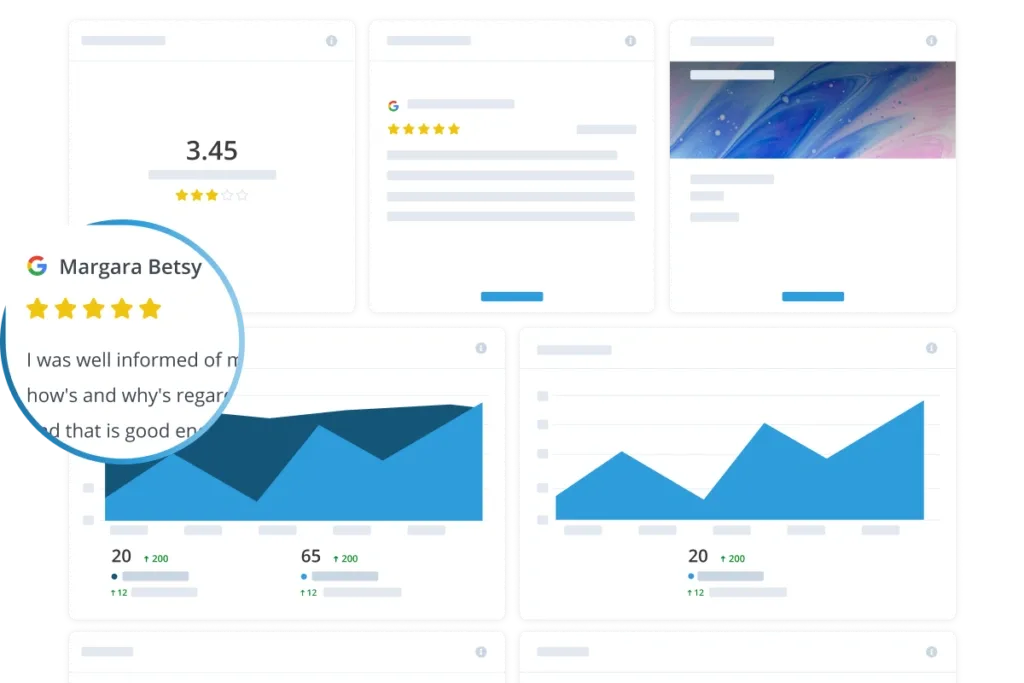
Your Google Business Profile (GBP) is the cornerstone of your roofing company's local visibility. Setting up this free tool the right way can boost your chances of showing up in the local 3-pack and bring quality customers to your business.
Choosing the right business category
The categories you pick for your roofing business directly affect your search visibility. "Roofing Contractor" should be your primary category - this isn't optional, it's vital for Google's system to classify you properly. Your business might offer other services like gutter cleaning or siding installation, so add these as secondary categories.
Wrong category choices can hurt your local rankings badly. Many roofing companies pick generic categories like "Home Improvement" instead of specifically choosing "Roofing Contractor". This basic mistake can keep your business hidden from local searches that matter.
The primary category needs to show your main service, and secondary categories should reflect your specialized services. This targeted strategy helps Google connect your business with customer searches.
Adding service areas and business hours
Setting up your service area is a vital part of your roofing company's profile. Enter your physical address first, then mark "Yes" for "I deliver goods and services to my customers at their location". You should set a realistic service radius - 20-30 miles works well unless you regularly travel beyond that.
You can add up to 20 service areas based on cities, postal codes, or neighborhoods. Be honest about where you work - adding locations outside your actual service area might get your profile suspended.
Your operating hours must be exact to keep customers happy. Make sure to highlight emergency services if you offer them. Your name, address, and phone number (NAP) should match exactly across all online platforms because differences can confuse customers and Google's algorithms.
Add both your main website URL and a direct link to your contact or estimate page to make it easy for potential customers to reach you.
Using photos and posts to stay active
Businesses with photos get 42% more interactions than those without. High-quality images that show your work and professionalism should be your priority. Make sure to include:
- Your logo and profile photos that match your branding
- Before-and-after shots of completed roofing projects
- Images of your crew working safely on job sites
- Photos of your office location and branded vehicles
Think of your GBP as a mini social media page that needs regular updates. Use Google Posts to share special offers, seasonal promotions, or completed projects. These updates show Google your business is active and engaged.
Your posts should feature eye-catching images with short, action-oriented text and clear calls-to-action like "Call now" or "Learn more". Mix up your content between promotional posts with seasonal deals, educational content about roofing, and updates about your community involvement.
A well-maintained GBP helps you stand out from other companies. You should answer customer questions on your profile quickly because ignored questions can harm your reputation. Adding messaging features makes it easier to talk with potential clients.
Your profile needs updates whenever your business changes, adds new services, or expands service areas. This ongoing fine-tuning creates a powerful tool that works around the clock to attract local customers to your roofing business.
Boosting Visibility in Google Maps
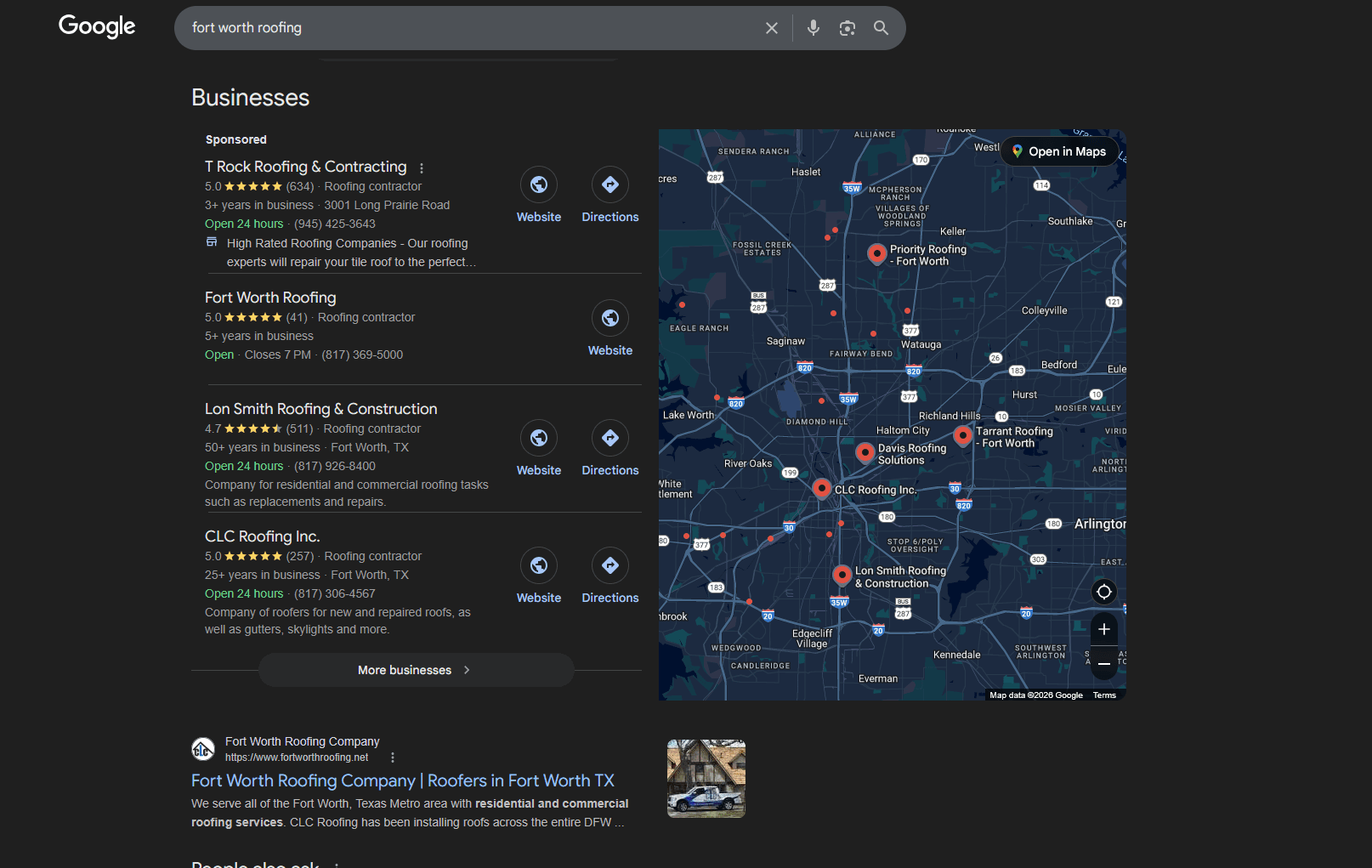
Google Maps visibility isn't just helpful for roofing companies - it's crucial. The Google Map Pack captures 44% of all clicks. Your roofing business must prioritize this visibility channel to generate leads effectively.
How the local 3-pack works
The Google Local 3-Pack (Map Pack) shows three businesses that Google deems most relevant to roofing service searches. This feature sits below paid ads but above organic listings. It takes up valuable screen space that catches everyone's attention. The Map Pack changed how local businesses compete online after its launch in 2015.
The Local 3-Pack stands out because it shows up in 93% of Google searches with local intent. Your potential customers see it first when they look for roofing services. Mobile users find it even more useful since map listings fill most of their screen. The click-to-call function attracts 60% of mobile searchers. This creates a direct line to phone leads.
The Local 3-Pack shows details that help customers make decisions:
- Star ratings and review count
- Business name and category
- Phone number for immediate contact
- Business hours
- Brief description of services
Proximity, relevance, and prominence explained
Google's local search algorithm uses three main factors to pick which roofing companies appear in the Map Pack:
Proximity means how close your business is to the searcher. Your physical location and service areas play a vital role. You can't control where customers search from, but you can optimize your service area settings in Google Business Profile.
Relevance shows how well your roofing business fits what people search for. You can improve relevance by:
- Setting your category as "Roofing Contractor"
- Adding detailed service descriptions
- Using local keywords on your website
- Keeping your business information consistent across the web
Prominence reflects your roofing business's reputation. This includes:
- Number and quality of reviews (most important)
- How often and recently you get reviews
- Citations and mentions online
- Backlinks from trusted websites
- Regular posts and engagement on Google Business Profile
These three factors create what Google calls your local "semantic map". This connects your roofing business with your services and locations.
Embedding maps and using location pages
A Google Map on your website sends strong signals to boost local visibility. This simple step can help you rank better in the Map Pack by confirming your location.
Steps to embed a Google Map:
- Open Google Maps and search for your business
- Click the share button from your business profile
- Select "embed a map"
- Copy the generated HTML code
- Paste it into your website's contact page
Location-specific pages offer one of the most powerful strategies for roofing companies. Most roofers work in multiple areas, so you need separate pages for each target location.
Your location pages should include:
- Content about local roofing challenges
- Local building codes and regulations
- Weather patterns that affect roofs
- Neighborhood roofing material considerations
- Local map embeds showing service coverage
- Customer testimonials from that area
This strategy builds what Google sees as "geographical authority". Your roofing business can rank better across all service areas, not just where you're located.
Building Local Authority Through Reviews and Citations
Reviews and citations are the foundations of any successful roofing company's local SEO strategy. These elements act as powerful trust signals that can boost your visibility in local search results.
Getting consistent reviews from customers
Reviews do more than just provide testimonials for roofing companies - they directly affect your rankings in Google's local pack. About 84% of consumers trust online reviews as much as personal recommendations. This makes them vital to turn prospects into customers.
You need a systematic approach to get a steady flow of reviews:
- Ask immediately after completion – Get feedback while customers still remember their positive experience
- Implement automation – Use automated emails or text messages with direct review links
- Train your team to ask – Let field crews and sales representatives ask for feedback on-site
- Monitor velocity – Google values steady engagement, so 2-3 reviews monthly work better than 20 reviews once a year
Your review strategy should prioritize recent and diverse feedback. Google sees fresh reviews as more relevant than older ones. Reviews that mention specific services (such as "roof replacement in Fort Worth" or "leak repair in Dallas") send valuable keyword signals that can boost your ranking potential.
Responding to reviews the right way
Your response to reviews shapes both your reputation and search visibility. About 89% of customers prefer companies that respond to all reviews. This shows how much active participation matters.
A simple "Thanks for your kind words!" works well for positive feedback. Negative reviews need more careful handling. Here's what works best:
Quick responses within 24-48 hours make a difference. Keep your tone professional and polite, even if you think the criticism isn't fair. Reach out to the customer directly to take the conversation private. Make your response personal by using their name and talking about their specific concerns.
Your responses to negative reviews often stick with potential customers more than the reviews themselves. A thoughtful, professional response shows you care about customer satisfaction and can turn a negative situation into something positive.
NAP consistency across directories
NAP (Name, Address, Phone number) consistency across online directories can make or break your local SEO success. Every mention of your business information online counts as a local citation.
Search engines penalize citations with major inconsistencies. About 73% of users stop trusting brands with wrong business listings. This affects both SEO and customer trust.
Roofing companies should focus on these platforms:
- Google Business Profile
- Yelp
- HomeAdvisor
- Angi
- Better Business Bureau
- Houzz
- Your local Chamber of Commerce
Data aggregators like Neustar, Factual, and Infogroup send information to dozens of smaller directories. Update your listings every three months to get the best results. Your information should match across all platforms.
Small differences like "St." versus "Street" or different suite numbers can confuse search engines and reduce your visibility. Last year, 85% of consumers found wrong or incomplete information on business listings. This shows how common this issue still is.
A systematic approach to building reviews and keeping citations consistent helps your roofing company build local authority. This leads to better Google Maps results and steady qualified leads.
Creating Localized Content That Converts
Content is the life-blood of local visibility for roofing companies. A strategic approach that speaks directly to local homeowners' needs makes location-specific content more than just adding city names.
Service area pages vs. general service pages
General service pages and service area pages serve different purposes. General pages broadly describe your roofing services, while service area pages target specific geographic locations you serve. This difference plays a crucial role in local search visibility.
Dedicated service area pages for each location can dramatically expand your reach if you serve multiple cities. These location-specific pages should connect directly to real markets like specific neighborhoods or suburbs, unlike generic coverage pages.
Effective service area pages include:
- Local weather conditions affecting roofing
- References to neighborhood characteristics
- Region-specific material recommendations
- Localized building codes and regulations
- Photos of completed projects in that area
Your entire digital presence benefits from location pages that boost Google Business Profile ranking and enhance local pack visibility.
Using long-tail local keywords
Long-tail local keywords match homeowner search intent by combining your services with geographic identifiers. Google understands what you do (roof replacement, storm damage repair) and where you do it through this approach.
Best practices for local keyword implementation include:
- Placing city names in page titles, headers, and meta descriptions
- Mentioning nearby landmarks or community features
- Embedding Google Maps on service area pages
- Using schema markup to tag location data
Target phrases like "roof repair in [City]," "emergency roofer near [Neighborhood]," or "best roofing company in [Zip Code]". Note that Google already understands proximity when returning local results, so overloading content with "near me" phrasing isn't needed.
Answering common roofing questions
Trust builds through FAQ content that addresses location-specific roofing concerns while targeting valuable long-tail keywords. Homeowners often ask "How often do roofs need replacement in [City]?" or "Are permits required for roof replacement in [City]?".
Each roofing location page needs 6-10 city-specific FAQs. The answers should reference:
- The specific city name
- Local roofing issues
- Action steps for the homeowner
Question-based keywords help capture leads with specific problems. Informative blog posts about topics like "How to Tell if Your Roof Needs Replacement in [City]" attract users in the research phase.
Local semantic connections matter to both Google and potential customers. Companies that show they understand their area's specific roofing challenges earn homeowners' trust through localized content.
Tracking Performance and Adapting to Changes
Local SEO success depends on careful tracking and measurement. Your roofing company might miss valuable opportunities to improve visibility and generate more leads without proper analytics.
Using Google Analytics and Search Console
Google Analytics and Search Console give you complete data about your website's performance. These free tools show traffic sources, user behavior, and search visibility.
Google Analytics 4 helps roofing contractors track these significant metrics:
- Phone calls and form submissions from organic visitors
- Organic traffic by location and device
- Conversion rates for quote requests
Google Search Console shows which keywords bring traffic to your website and spots technical issues that affect visibility. This information helps you identify high-performing pages and those needing optimization.
Many roofing companies have these tools installed but haven't set them up correctly to track conversions. You can analyze performance down to individual clicks by linking these platforms with your Google Ads account.
Monitoring map rankings and reviews
Your position in Google Maps matters because businesses in the top three local results get up to 70% of all clicks for location-based searches. BrightLocal and Moz Local help you track map rankings in locations of all types.
You should check reviews daily and focus on:
- Review sentiment and negative feedback
- Total review count and average star rating
- Response times to customer questions
Reviews' quantity and quality affect your local search rankings directly, so getting consistent reviews is essential. You can measure engagement through Google Business Profile insights by tracking metrics like phone calls and direction clicks.
Adjusting strategy based on data
SEO works best when you make regular adjustments based on performance data. You can respond to algorithm changes by checking search rankings, traffic patterns, and competitor strategies monthly.
Update your approach when you see:
- Map Pack position drops of more than 2 spots
- Organic traffic changes above 20%
- Conversion rate drops of 10% or more
Note that Google makes about 4,500 algorithm changes yearly. Monthly strategic reviews should look at:
- Keyword performance and opportunities
- Content gaps requiring attention
- Conversion rate optimization possibilities
This informed approach helps you make smart marketing investments and improve your roofing company's online visibility steadily.
Conclusion
Google Maps and local SEO are powerful tools that help roofing companies find qualified prospects. The Google Map Pack attracts nearly 50% of all clicks, making it prime digital real estate for contractors who want to expand their business. Local search mastery gives roofing companies a clear edge over their competition.
Proximity, relevance, and prominence are the foundations of local search success that determine your visibility to homeowners searching for roofing services. Your Google Business Profile builds this visibility, while steady reviews and precise citations boost your local authority. Location-specific content that tackles unique roofing challenges in each service area helps you connect with homeowners who need help.
Local SEO needs constant attention and regular updates. You can maintain and boost your visibility by monitoring map rankings, checking website performance, and adapting to algorithm changes.
These strategies will help establish your roofing company as the preferred choice in your service areas. National companies might fight for broad visibility, but your local presence creates meaningful connections with community homeowners who need your services. The gap between scarce leads and a steady stream of qualified prospects often depends on your local search optimization.
Key Takeaways
Local SEO and Google Maps are game-changers for roofing companies, with the Map Pack capturing nearly 50% of all clicks and appearing in 93% of local searches. Here's what every roofer needs to know:
• Optimize your Google Business Profile completely - Choose "Roofing Contractor" as primary category, add accurate service areas, and maintain active posts with high-quality project photos.
• Focus on the three ranking pillars - Proximity (service area coverage), relevance (accurate business categorization), and prominence (reviews and citations) determine Map Pack visibility.
• Build consistent review momentum - Aim for 2-3 reviews monthly rather than sporadic bursts, respond professionally to all feedback, and maintain identical NAP data across directories.
• Create location-specific content pages - Develop dedicated pages for each service area addressing local weather, building codes, and neighborhood-specific roofing challenges.
• Track performance religiously - Monitor map rankings, review velocity, and conversion metrics monthly to adapt strategy based on Google's 4,500+ annual algorithm changes.
The bottom line: While national companies compete broadly, your local dominance connects you directly with homeowners in your community who need roofing services most. Success requires treating local SEO as an ongoing process, not a one-time setup.
FAQs
Q1. How important is local SEO for roofing companies?
Local SEO is crucial for roofing companies, as 97% of consumers search online for local businesses. It helps roofers appear in local search results and Google Maps, which can significantly increase lead generation and visibility to potential customers in their service area.
Q2. What is the Google Local 3-Pack and why does it matter for roofers?
The Google Local 3-Pack is a feature that displays the top three local businesses for a given search query. It's critical for roofers because it appears in 93% of Google searches with local intent and captures about 44% of all clicks on local search result pages, making it prime digital real estate for attracting potential customers.
Q3. How can roofing companies improve their Google Maps ranking?
Roofing companies can improve their Google Maps ranking by optimizing their Google Business Profile, ensuring NAP (Name, Address, Phone) consistency across online directories, gathering consistent positive reviews, creating location-specific content, and using local keywords in their online presence.
Q4. What role do reviews play in local SEO for roofing businesses?
Reviews are crucial for local SEO as they directly influence rankings in Google's local pack. They serve as trust signals, with 84% of consumers trusting online reviews as much as personal recommendations. Consistently acquiring positive reviews and responding to all feedback can significantly boost a roofing company's local visibility and reputation.
Q5. How often should roofing companies update their local SEO strategy?
Roofing companies should regularly monitor and adjust their local SEO strategy. Monthly check-ins focusing on search rankings, traffic patterns, and competitor strategies are recommended. This allows for timely responses to Google's algorithm changes, which occur approximately 4,500 times per year, ensuring continued visibility and lead generation.